I like researching murderers, but not because I’m obsessed with how they commit the murders. That’s just creepy and very disturbing. I’m obsessed with trying to understand why they murder. People all over the world have been subjected to horrible abuse, but they don’t all become murderers. My first person for this thread is Britain’s youngest female killer.
The Tyneside Strangler: 11-Year-Old Mary Flora Bell
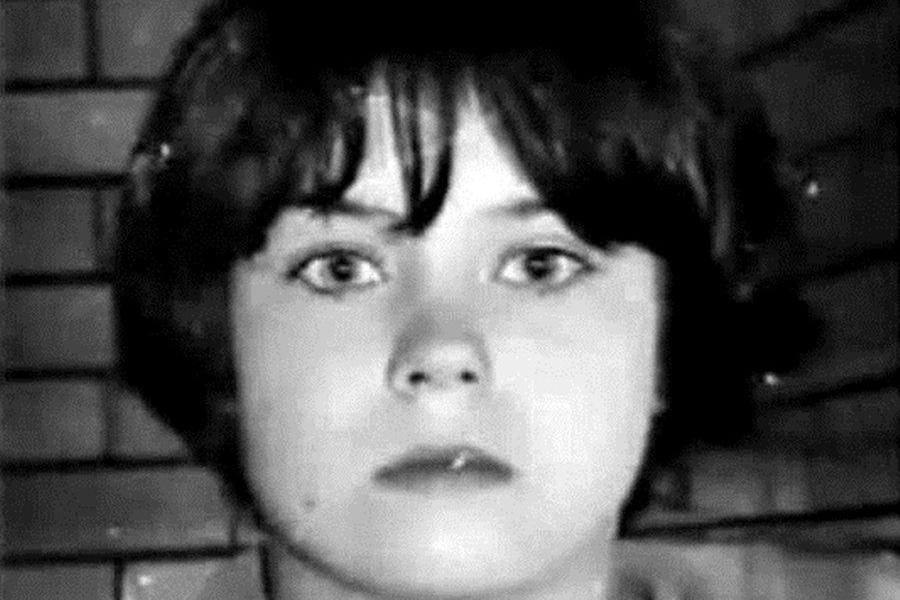
In the spring of 1998, a fourteen-year-old girl and her mother were escorted from their seaside house with bed sheets over their heads to get away from a mob of reporters. The teenager found out that day that her mother’s birth name was Mary Flora Bell, who she was given a new identity after being released from HM Prison Askham Grange in 1980.
On May 25, 1968, four year old Martin Brown was found asphyxiated. Four month’s later on July 31, Brian Howe was found strangled with small cuts on his body. The police questioned 1,200 children. The answers of two girls raised concerns. The girls were Mary Flora Bell and Norma Joyce Bell, eleven and thirteen years old respectively. Although the two friends seemed to have a lot in common they were not related to each other. It wasn’t long before the girls began accusing each other, and the two were arrested on August 5, 1968 and charged with murder. Mary’s epic reply to hearing the charges was “that’s all right by me.”
Mary was born to Betty Bell, a seventeen-year-old prostitute. For most of her life she believed Billy Bell, a robber and career criminal, to be her biological father. She was raised on the rough part of Scotswood, an area of Newcastle England filled with domestic violence and crime. Billy was often out of work and in trouble with the law. Her mother, mentally unstable herself, often left Mary with relatives or friends. She once left Mary with a woman she met outside an abortion clinic. Several family members have stated that Betty attempted several times to kill Mary and make her death look accidental. Her family grew suspicious when Mary once fell from a window, and on another occasion accidentally consumed sleeping pills. One witness has said that she saw Betty giving Mary the pills as sweets. Some suspect that Betty suffered from Munchausen’s syndrome by proxy, a condition where she sought attention by hurting Mary. Mary has also accused her mother of allowing men to engage in sexual acts with her daughter since the child was four.
The fall out of the window did cause brain damage to Mary’s prefrontal cortex, where decision making occurs. In school, Mary became a chronic liar and often voiced her desire to hurt people. She gained a reputation for being a show-off and proudly called herself a murderer, but nobody took her seriously.
On May 11,1968, Mary and Norma were playing with a three-year-old boy on top of a Newcastle air raid shelter when the boy fell and was severely injured. The incident was written off as an accident. The following day, the mothers of three young girls informed police that Mary had attacked and choked their children. The police interviewed and lectured Mary, but no charges were filed.
Two weeks later, two boys were playing in an abandoned house when they found the corpse of four- year-old Martin Brown in an upstairs room. With no obvious cause of death, the police ruled that Martin must have swallowed pills from a bottle of painkillers nearby his body. In the days to come Mary bragged to other children that she killed Martin, but her claims were dismissed. People thought she was just a troubled little girl desperate for attention.
The following day when a local nursery was vandalized police found four notes that made them think whoever broke in did it as a sick joke. The notes found read like this: “I murder SO THAT I may come back”, “Fuch off, we murder, watch out Fanny and Faggot”, “You are mice Y Becurse we murdered Martain Go Brown you Bete Look out there are Murders about by Fanny and auld Faggot you Screws” and “We did murder Martain Brown Fuckof you Bastard.” Later the girls revealed that Norma was “Fanny” and Mary “Faggot.” Four days later, the girls appeared at the Brown residence, asking to see Martin. When Martin’s mother reminded them of the tragedy, Mary replied, “Oh, I know he’s dead. I wanted to see him in his coffin.”
Two months later, three-year-old Brian Howe disappeared and an immediate search was mounted. The boy’s dead body was discovered at a vacant lot. His legs, stomach and genitals mutilated. On his stomach someone had tried to carve the letter “M”into his skin with a razor blade. A pair of broken scissors were found nearby.
The Medical Examiner suggested the killer might be a child, because of the little force used to strangulate him. Detectives soon began interviewing children and asking for their whereabouts the day Brian went missing. During the interviews Norma and Mary’s answers were inconsistent and raised flags. Norma kept smiling as she was questioned and appeared excited by the murder. Mary told detectives that she had seen an older boy abusing Brian, but the police placed that boy at the airport the afternoon Brian was strangled. She also said that she saw Brian playing with a pair of scissors. The scissors were confidential information the police had not released to the public. Hearing this they knew Mary had information about what had occurred. Norma was questioned a second time before Brian’s funeral, and she quickly broke down and told detectives that she saw Mary killing the boy.
During the nine days of trial court psychiatrists described Mary as “intelligent, manipulative, and dangerous.” Mary was defiant, cold, talked back to the prosecution and did not show a drop of remorse. Meanwhile, Norma presented herself as a fragile girl who tripped over her words, cried and appeared to be the slow-witted friend coerced by evil Mary. Despite the accusations they each made against one another during the trial, at times the girls would lock eyes devoid of emotions as if strengthening their bond. Eventually, the judge ordered that the girls could not have contact with each other. The dramatic spectacles of Mary’s mother disrupting the trial with sobbing and running out of the court room wailing did not help Mary’s case.
At the sentencing, the judge stated that Mary was a dangerous risk to herself and other children. Confident and self possessed Mary, based on diminished responsibility, was found guilty of the two charges of manslaughter and sentenced to life imprisonment at Her Majesty’s pleasure. Norma was acquitted. Prisons in England were not equipped to deal with a girl murderer. Everyone scrambled to find a suitable place where the dangerous girl could serve her time. Mary was first housed with all boys at the reform school Red Bank Special Unit.
Betty visited Mary often, but the visits appeared to be a detriment to her daughter who according to staff was aggressive and appeared disturbed after her mother’s visits. Betty played at being a mother. She didn’t miss the opportunities to remind Mary of how much she suffered as the mother of a juvenile murderer.“Jesus was only nailed to the cross, I’m being hammered,” she once complained to Mary. As expected, the attention starved mother also didn’t miss the opportunity to sell stories to the tabloids and even forge notes to prove Mary’s psychotic tendencies.
Mary went through many counselors while imprisoned, but none of them really got to know her. Red Bank’s philosophy was to focus on the present, because worrying about the past was seen as detrimental. Child psychiatrists have noted that Mary appeared to have blocked out her past rather than examine why she killed, with the help of professionals.
In 1977, Mary was transferred to Moor Court prison, where she escaped with two boys. They were caught three days later. It was enough time for narcissistic Mary to try to sell the story of how she lost her virginity, to the tabloids. In 1980, at the age of twenty three Mary Flora Bell was considered reformed by the legal system and was released with a new identity. Her daughter was born in 1984, and even though Mary was allowed to raise the child, the baby became a ward of the High Court until she turned 18.
A biography of Mary’s life, Cries Unheard: The Story of Mary Bell was released in 1998. The public was furious when they found out that the author paid for her story. It’s believed that the payment was tracked to Mary, and that’s how reporters found her and her daughter’s whereabouts. Other sources say that Mary’s partner was tracked until it led reporters to Mary.
In 2001, Mary won a battle in the High Court to keep her anonymity and her daughter’s anonymity for life. She became a grandmother in 2009, and the court order was updated to include her granddaughter. Mary, her daughter and her granddaughter’s whereabouts are unknown, as it should remain as long as they continue living as law-abiding citizens of England.
***
All That’s Interesting. (2018, March 16) “Evil Born”: The Vicious Crimes Of 11-Year-Old Murderer Mary Bell. https://allthatsinteresting.com/mary-bell
Brooks, Richard; Calvert, Jonathon, Gerrard,Nicci; Johnston, Lucy and McSmith, Andy. (1998, March 3) The mob will move on, the pain never can. The Observer. https://www.theguardian.com/observer/focus/story/0,6903,688106,00.html
Harding, Luke. (1998, April 30). Hounding of Mary Bell : Child killer forced into hiding after tabloids track her down. The Guardian. https://www.theguardian.com/media/1998/apr/30/pressandpublishing.childprotection2
Monacelli, Antonia. (2018, January 11). Murderous Children: 11-Year-Old Serial Killer Mary Bell. Owlcation. https://owlcation.com/social-sciences/Murderous-Children-Mary-Bell
Murderpedia. (n.d.). https://murderpedia.org/female.B/b/bell-mary-flora.html
 BRI'S BLOG: SOME TRUTH - SOME SATIRE - SOME RANTING